 Elmer
Elmer
New grid tariffs: what do they mean for your charging?
A large part of the price of electricity at home is the grid tariff (nettarif) charged by your grid company (netselskab). It is not the same all year, and it is highest just when most people come home and plug in the car.
Three periods in the day
Most grid companies split the day into three. From 00:00 to 06:00 the tariff is lowest. From 17:00 to 21:00 it is highest, because everyone uses electricity at the same time. The rest of the day it sits in between. On top come the spot price, Energinet's tariffs, electricity tax and VAT.
Winter and summer
From 1 October to 31 March the tariff between 17:00 and 21:00 is much higher than in summer. Right now electricity at home costs on average around 2.12 DKK/kWh between 17:00 and 21:00 in winter and 1.07 DKK/kWh at night. In summer it is around 2.00 and 1.50 DKK/kWh. The spot price also changes with the season, so the difference in the total price is smaller than the difference in the tariff. The figures include VAT and are an average across the grid companies.
When the tariff changes
Grid companies can change their tariffs, and many do so on 1 January. The switch between winter and summer happens on 1 April and 1 October. You are not told every time, but you can see your own grid company's tariff hour by hour under Home charging.
What it means for you
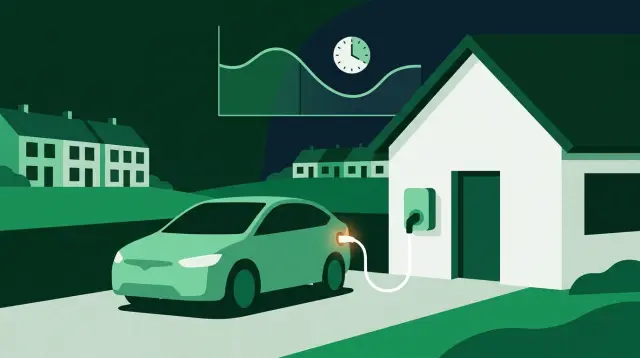
If you charge at night, you will hardly notice the change. If you plug in the car when you get home and it charges straight away, you pay the highest price in winter. With smart charging the car waits until night by itself. If you have a subscription with a fixed price, the tariff is included in the price and you do not feel it directly.
 Smart charging and hourly electricity prices
 Danish electricity tax (elafgift) and EV refunds
 Solar panels and your electric car
 What does an electric car cost per year in Denmark?